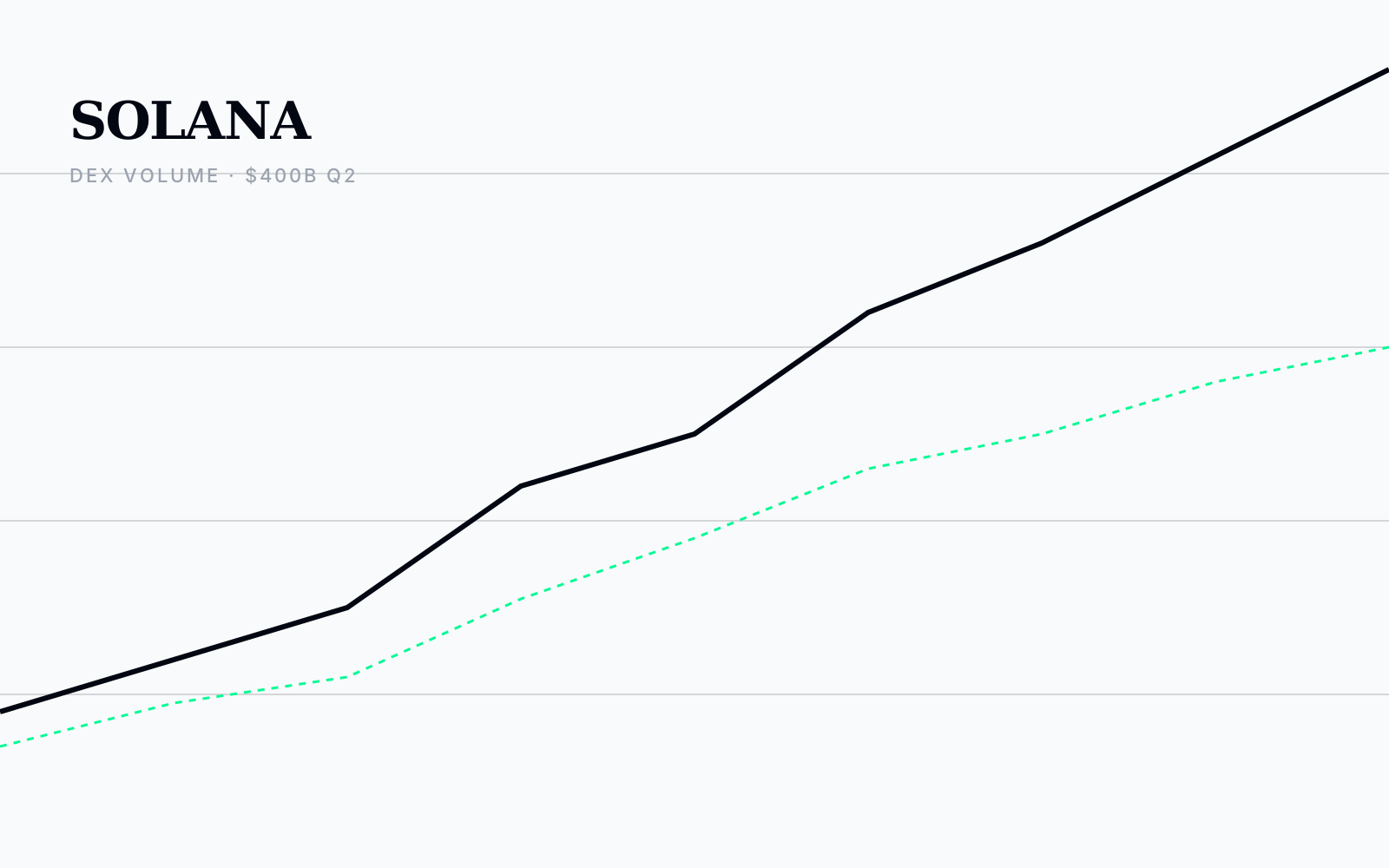
Memecoin DEX volume across all chains averaged roughly $1.4 billion per day in March, settling into what looks like a stable post-cycle range after the sharp contraction from the late-2024 peak. At the cycle high, daily memecoin volume was running above $7 billion. The current range is around 20% of that peak — and roughly 4x the pre-2024-cycle baseline.
The settling matters more than the absolute numbers. Memecoin volume is not going back to where it was. It is also not going away.
The Cycle Recap
The memecoin meta of 2024 was concentrated overwhelmingly on Solana, driven by the combination of low transaction fees, the Pump.fun launch infrastructure, and the social-media flywheel that turned memecoin launches into cultural events. Daily new-token-creation peaked at roughly 30,000 new memecoins on Pump.fun alone in late 2024. The volume that flowed through these tokens generated meaningful fee revenue for the Solana network and for the DEX aggregators (primarily Jupiter) that routed the trades.
The peak was unsustainable, and the contraction came in waves through 2025. The first wave was driven by token-launch fatigue — too many launches, too many rugs, too much noise for the social-media flywheel to keep selecting winners. The second wave was driven by the broader market drawdown that hit risk assets in mid-2025. The third wave was driven by the eventual exit of the most active speculators, who either lost capital or rotated to other markets.
By Q4 2025, daily memecoin volume had compressed to approximately $1.1 billion. It has since recovered modestly to the current $1.4 billion range, where it has held for two consecutive quarters.
Where the Volume Now Lives
Solana remains the dominant venue for memecoin volume but its share has compressed from the cycle-peak ~85% to roughly 65%. The other 35% is distributed across:
Base (roughly 18% of memecoin volume), which has emerged as the secondary memecoin venue driven by the Coinbase distribution flywheel for new token launches.
Ethereum mainnet (roughly 6%), which still hosts the established memecoin franchises (DOGE wrapped, SHIB, PEPE) but sees minimal new-launch activity due to gas costs.
Other chains (roughly 11%), including Hyperliquid, BNB Chain, Sui, and various smaller venues each with their own memecoin micro-ecosystems.
The consolidation of volume on Solana and Base — together about 83% — reflects the structural advantages those chains have for memecoin activity: low fees, fast confirmation, mature launch infrastructure, and tight integration with the social-media platforms that drive memecoin discovery.
What Sticky Volume Means for Solana's Economics
Solana's network revenue has been substantially reshaped by the memecoin cycle. At peak, roughly 60% of Solana's transaction-fee revenue and an even higher share of MEV-related revenue came from memecoin trading and launch activity. The contraction has compressed network-fee revenue meaningfully, but the residual base — at the current volume level — still represents a structurally significant portion of Solana's economic activity.
If the current volume floor holds, Solana's economics are durable at a different level than they were at peak. The network is no longer running on the assumption of continued memecoin-volume growth, but it is also not facing a return to pre-memecoin economic levels. The middle outcome is what's settled.
The implication is that Solana's case as a high-velocity transaction layer has been validated by the memecoin cycle in a way that survives the cycle's contraction. The infrastructure built to handle peak memecoin throughput continues to handle the post-peak baseline comfortably, and the developer tooling that emerged around memecoin use cases (Jupiter's routing, Pump.fun's launchpad, the Phantom wallet's UX optimizations) has matured into infrastructure that's useful for non-memecoin Solana activity as well.
What Sticky Volume Means for DEX Revenue
The DEXes that captured memecoin volume — Jupiter on Solana, Uniswap on multiple chains, the launch-platform-integrated DEXes like Pump.fun's swap product — have seen revenue compress in line with volume but not collapse. Jupiter in particular has retained meaningful revenue even at the lower volume floor, partly because the protocol's revenue mix has diversified into non-memecoin Solana volume and partly because the per-trade fee economics have proved durable.
The longer-term question for memecoin-dependent DEXes is whether their revenue mix continues to diversify. Pump.fun, for instance, has launched additional product surfaces (NFT-style token launches, social-graph integrations) that are designed to capture user attention beyond the pure memecoin trading flow. Whether those diversification efforts succeed will determine whether the platforms that defined the cycle remain relevant in its aftermath.
The Structural Reading
The memecoin cycle is best understood not as an aberration but as a category that emerged into its own market segment. The post-cycle volume floor — 4x the pre-cycle baseline — represents the addressable market for memecoin trading at a steady state, after the speculative excess has cleared but with the demographic and behavioral patterns the cycle established still in place.
That market is smaller than its peak and large enough to matter. It is concentrated on Solana and Base, supported by mature launch and routing infrastructure, and integrated into the broader DeFi flow in ways that cross over into ordinary trading activity. It is also, for the moment, stable.
Whether the next major crypto cycle reignites memecoin activity to peak-2024 levels or whether the segment continues to evolve at the current floor will be determined by macro and crypto-cycle factors that aren't yet visible. What is visible is that the post-bust floor has held for two quarters and that the infrastructure built to support it is intact.