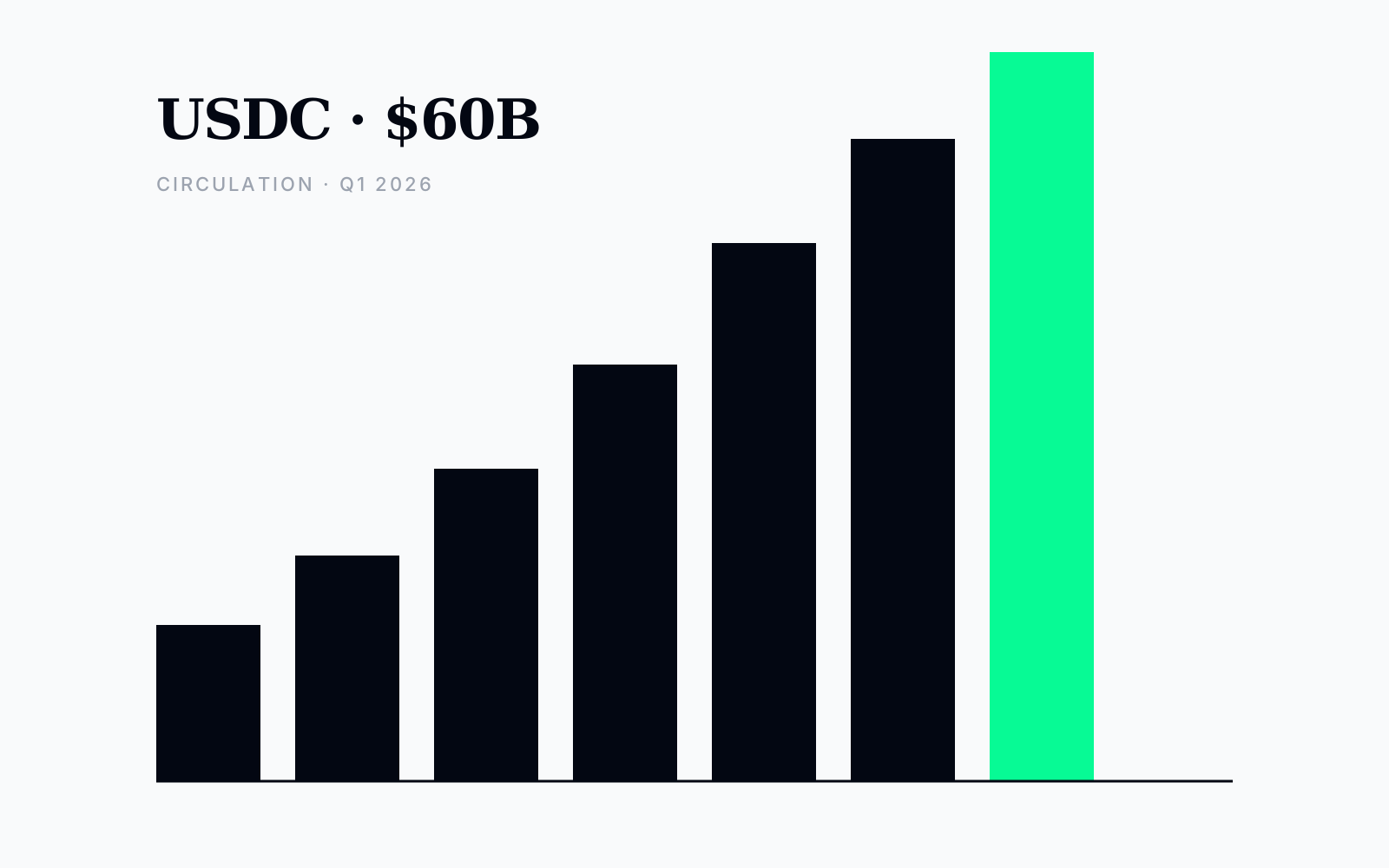
USDS, the rebranded successor to MakerDAO's DAI, crossed $4 billion in circulating supply this week, with the migration from DAI now accounting for roughly 60% of cumulative issuance and net new flows accounting for the rest. The milestone establishes USDS as a top-five stablecoin by DeFi-integrated supply, though it remains substantially smaller than USDC, USDT, and PYUSD by overall circulation.
The growth pattern is informative about what kind of stablecoin USDS is becoming and what it is not.
The Conversion Mechanic
USDS launched in September 2024 as part of Maker's rebrand to Sky and the broader restructuring of the protocol's product set. DAI continues to exist and continues to be redeemable, but Sky has structured the economics to favor migration: USDS holders earn the protocol's "Sky Savings Rate" (currently around 5.4%, paid via the sUSDS wrapper); DAI holders do not have a comparable native yield product.
The conversion mechanic is straightforward. DAI holders can swap into USDS at a 1:1 rate through the Sky frontend, with no fee. The swap is bidirectional, but the asymmetric yield economics push flow predominantly from DAI to USDS over time.
The conversion has not been instant. Eighteen months in, roughly 60% of pre-migration DAI has converted, with the remaining 40% held by addresses that either don't engage with Sky frontends, hold DAI as collateral inside DeFi protocols where conversion would require unwinding positions, or are inactive entirely. The 60% figure has been growing slowly — perhaps 2 percentage points per quarter — and the protocol has not signaled a deadline for the migration.
What's Actually Driving Adoption
The yield differential is the most-cited driver of USDS adoption, but it isn't the whole story. Three other factors matter.
SubDAO ecosystem progress. Sky's SubDAO structure — independent governance entities focused on specific verticals (Spark for lending, Allocator SubDAOs for collateral, etc.) — has matured into a real ecosystem. Spark in particular has emerged as a meaningful DeFi-credit protocol in its own right, with USDS as the native asset for borrowing and supplying. The SubDAO flows account for a meaningful share of USDS demand that wouldn't exist in a non-SubDAO structure.
RWA collateral expansion. Sky has continued to expand the RWA collateral mix backing USDS, with allocations to tokenized treasuries from multiple issuers and to specific credit facilities. The expansion has both increased the protocol's net interest income (which funds the Sky Savings Rate) and broadened the depositor base interested in USDS as a yield-bearing dollar exposure.
Protocol integrations. USDS has integrations across the major DeFi venues — Aave, Morpho, Curve, Uniswap, Pendle — that are now broadly comparable to DAI's. For protocols building products that need a deeply-integrated decentralized stablecoin, USDS has become the default choice over DAI in most new deployments.
What USDS Hasn't Become
The original Maker thesis — that DAI would become a meaningful payments stablecoin used outside DeFi — has not materialized for USDS either. The asset is overwhelmingly a DeFi-internal token: held in protocol positions, used as collateral or borrowing liquidity, earned and re-deposited as yield. The flows that show up at fiat off-ramps or merchant acceptance points are minimal.
This isn't a failure exactly — it reflects the market structure that has settled around stablecoin specialization. USDC and PYUSD have captured the regulated-payments use case. USDT remains the global cross-border default. USDS occupies the decentralized-DeFi-yield niche, where its structural differentiation (not relying on any single bank custodian, partial RWA backing with diversified issuers, native yield distribution) matters most.
The question for Sky's strategic direction is whether the DeFi-yield niche is large enough to sustain meaningful growth, or whether the protocol needs to expand into adjacent use cases. Sky has not signaled a strong push toward retail or merchant payments — the rebrand and product set both suggest the protocol is leaning into its DeFi positioning rather than against it.
The Competitive Picture in Decentralized Stablecoins
USDS now leads the decentralized-stablecoin segment by a meaningful margin, but the segment itself is fragmenting in interesting ways.
Frax has continued to evolve away from its original algorithmic design and into a fully-collateralized stablecoin with a separate AMO-managed yield product. Its size has declined from peak levels but it retains a loyal protocol base.
crvUSD, Curve's stablecoin, has settled into a niche role primarily within the Curve ecosystem itself.
Liquity's LUSD and its successor V2 product (BOLD) have remained the most ideologically pure decentralized-stablecoin option but at much smaller scale.
The newer entrants — Ethena's USDe (synthetic dollar, not strictly decentralized but operationally distinct), Resolv's USR, and a handful of others — have grown but in different niches than USDS occupies.
USDS has consolidated its position as the default decentralized stablecoin for general DeFi use, with the yield-bearing variants and AMM-bridge primitives that the niche requires. Whether the segment grows enough to make USDS a top-three stablecoin overall, or whether it stays a meaningful but bounded fourth-or-fifth-place asset, depends on whether DeFi's share of the broader stablecoin market expands or contracts over the next several years.
For now, $4 billion is a milestone, the migration from DAI is producing the asset Sky designed it to produce, and the DeFi flows that USDS exists to serve are flowing.